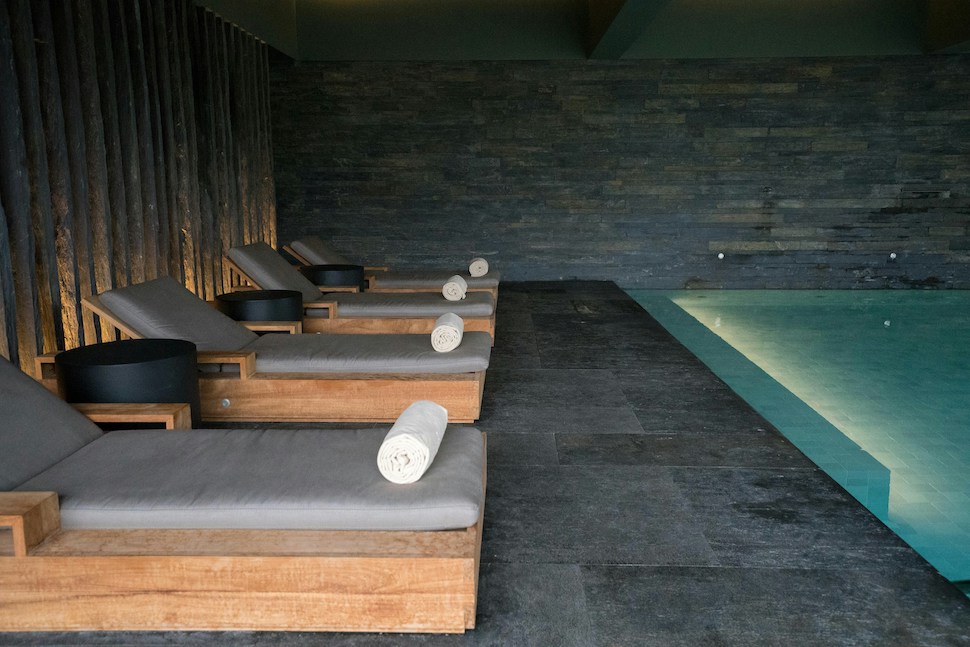
Why many of luxury spa’s greatest challenges are structural—not cultural.
A spa can be impeccably designed, beautifully branded, and have strong commercial appeal. Still, it may struggle operationally because the internal team cannot sustain the demands being placed on it. This is one of the most substantive challenges in the luxury spa category. It is also one of the least honestly examined.
We call it a “culture” problem. We introduce training programs, reset standards, and sharpen accountability. We ask teams to communicate better and care more. Yet the same friction reappears in new forms and people. We adjusted the wrong source. Often, what looks like a culture failure is actually a structural one. It is the human cost of a business model that has not evolved enough to support the people it depends on most.
In long-tenured luxury teams, a predictable pattern arises. Compensation is strong. The environment is desirable, so over time people protect their positions rather than invest in the evolution of the business. New leadership, ideas, or colleagues are seen not as opportunities but as disruptions. What follows is rarely overt. It is subtle: territorial behavior, resistance to change, selective engagement, and the quiet erosion of forward momentum. Leadership sees this and concludes: attitude problem. Culture problem. The response is more training, more standards, more accountability—all legitimate tools, but applied at the wrong level.
What seems like resistance is often self-protective adaptation. When a person’s body is their main tool and their emotional output is part of the product, self-protection becomes practical. That does not excuse poor behavior, but it explains it more intelligently than ‘culture’ often does.
The Deeper Contradiction
Luxury spas speak fluently in the language of restoration. We market calm. We sell presence. We promise a quality of care that feels effortless and deeply human, but the economic model underlying that promise still relies too heavily on the labor of massage therapists, estheticians, and nail technicians. They must embody wellness through work that is repetitive, physically demanding, and often energetically intimate. In many properties, massage still represents the majority of total revenue.
This contrast raises a question the industry rarely asks honestly: If wellness is the promise, does the model truly support the wellbeing of the people delivering it? In most cases, the answer is incomplete at best.
When an operation’s internal conditions cannot support demanded standards, degradation is inevitable. Service consistency, training, guest recovery, retention, and long-term business health all suffer. Culture is blamed, but it is where misalignment finally becomes visible.
A spa cannot keep marketing restoration while failing to create restorative conditions for the people sustaining it. That is not a culture problem; it is a design and business model problem.
Massage and esthetics are not the problem. They are foundational and should remain so. The issue is the heavy weight placed on them. Commercial success still relies on the ongoing effort of bodies and nervous systems that get little support or intentional care.
There is another problem, less often discussed. Wellness becomes transactional if it is just a service.
There is another problem, less often discussed. Wellness becomes transactional if it is just a service. A guest books a massage, receives it, and leaves—even when it is skillful. The experience is shaped entirely by its transaction. There is no arc, no preparation, no integration after. The treatment stands alone, so its effect does too.
This is the gap between what spas promise and what most design. We use transformation language but structure experiences as service menus. The guest chooses, the artisan delivers, the interaction ends. What we call wellness is often just beauty and bodywork made to feel more premium.
The treatment should be the culmination of the wellness experience — not the container for it. Progress requires a fundamental resequencing of how the guest journey is designed. Concretely, this means evaluating every stage of the guest experience and assessing whether it supports genuine wellness for both guests and staff. Leaders should redesign touchpoints before, during, and after treatment to prioritize true restoration for all involved.
Thermal environments, guided ritual, movement, breathwork, sound, cognitive reset, and nutrition are not just menu items. They create the conditions that make treatment meaningful. When a guest moves through heat and cold, is guided into stillness, and lets the nervous system calm before a therapist begins—the quality of that contact transforms. The body receives differently. The experience deepens. The artisan’s work is not diminished. The environment shares the work and lifts the practitioner.
This is the difference between a wellness destination and a spa that uses wellness language. One designs the whole arc; the other delivers only a service within it. Massage, esthetics, and beauty are, in this model, what they should always have been: the most skilled and intimate parts of a more encompassing experience. They are extensions, not the total offer.
This approach relieves the artisan of an impossible burden: the expectation that their hands alone will produce the transformation the brand promises. That is not possible. When the environment shares the work, practitioners get the conditions they need to excel. The most compelling luxury spas of the next decade will not stand out solely by design, product, or service choreography. Those are necessary, but not enough. What will distinguish wellness brands is clear: audit and redesign internal business conditions to match the rigor, empathy, and intent of the guest journey. Integrate these changes into hiring, workload distribution, ongoing support, and staff wellness resources, ensuring the guest promise is sustainable.

Olufemi Ibitayo
Born in Nigeria and raised in the States, the idea of home lies somewhere in-between. Spa days, art, history, travel, people, cinema, laughter, competing, and breaking bread are just a few of my favorite things. A cultural taste-tester and seasoned traveler, I thrive at transforming creative concepts into tangible realities.
- Web |
- More Posts(2)