
Sensitive skin isn’t really a category anymore—it’s where most people seem to land. A meta-analysis associated with Johns Hopkins University puts global self-reported sensitivity at around 71 percent of adults, with nearly 40 percent describing it as moderate to severe. Not long ago, that number hovered closer to 40 percent overall—now it feels like a different landscape entirely.
What’s shifted isn’t just awareness, but the conditions skin is living in—and how we’re treating it. Daily exposure to pollution, UV, and climate stress is one side of the equation; the other is our increasingly hands-on approach to skincare. Layering actives, trying new treatments, doing more (and then a little more)—it adds up. The result is often a barrier that’s quietly overwhelmed.
Clinically, sensitive skin is defined as a heightened reaction to things that shouldn’t trigger irritation. But more and more, that sensitivity isn’t inherent—it’s developed. Skin isn’t simply sensitive; it’s been pushed into that state.
There’s still a technical distinction between occasional reactivity and ongoing sensitivity, but in real life, that line is fading. “Sensitive” has become a kind of shorthand—guiding how products are made, how treatments are approached, and how people describe what their skin is going through.
Even “clean” beauty is being reconsidered. It’s less about what’s excluded, and more about what the skin can comfortably handle. Fewer actives. Fewer assumptions. A return to balance.
Sensitive skin, in other words, isn’t a trend—it’s more of a reset.
From the Clinic: Rethinking Sensitive Skin Care
Sensitive skin, as dermatologist Tia Paul, MD, Chief Medical Officer, Aesthetics at bluSONIL notes is often less about the products themselves and more about how they are used. “Sensitive skin is one of the most misunderstood skin types I see in clinic,” she says. “Many patients come in frustrated—they’re investing in ‘soothing’ products, yet still experiencing redness, burning, or breakouts.”
The pattern is familiar: too many steps, too many new inputs, and a barrier that never has the chance to recalibrate. “The reality? Sensitive skin isn’t just about what you use—it’s often about how you use it,” she explains, noting that reactive skin tends to respond best not to more intervention, but to less.

Tia Paul, MD, Chief Medical Officer, Aesthetics at bluSONIL
At the core is a shift toward restraint. “When skin feels reactive, the instinct is often to try more—more serums, more actives, more trending ingredients,” she says. “But sensitive skin thrives on simplicity.” A streamlined routine—gentle cleanser, barrier-supporting moisturizer, sunscreen, and at most one targeted treatment—allows the skin to stabilize rather than continuously react.
Equally important is rethinking assumptions around “clean” or “natural.” “Many patients assume that ‘natural’ or ‘clean’ products are better for sensitive skin,” Paul notes. “What matters more is predictability—fragrance-free formulations, balanced ingredient lists, and fewer variables overall.”
Over-exfoliation remains another quiet disruptor. “Exfoliation is often overused,” she says, particularly with the rise of at-home acids and resurfacing products. For reactive skin, limiting exfoliation to once or twice weekly—and favoring gentler options such as lactic acid or polyhydroxy acids—helps maintain function without tipping into inflammation.
Ultimately, sensitive skin is often a reflection of barrier health. “At its core, sensitive skin is often a sign of a disrupted skin barrier,” Paul explains. Ingredients that reinforce that structure—ceramides, glycerin, hyaluronic acid, and lower concentrations of niacinamide—help restore resilience over time. Just as critical is pacing: “Introduce one new product at a time,” she advises, allowing the skin to respond without confusion.
What to Look for in Sensitive Skin Products
As Paul emphasizes, choosing skincare for sensitive skin is less about chasing trends and more about selecting well-formulated, predictable ingredients.
- Fragrance-free formulations
Fragrance is one of the most common triggers of irritation and allergic contact dermatitis. - Barrier-supporting ingredients
Look for products that actively restore the skin barrier: ceramides, fatty acids, and cholesterol.These mimic the skin’s natural structure and help reduce reactivity over time.
Three Spa Lines Formulated for Sensitive Skin
The Restorative Collection
The Restorative Collection
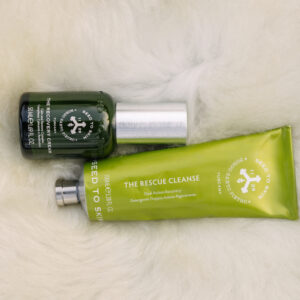
Newly launched, Seed to Skin Tuscany’s Restorative Collection approaches sensitive skin with a more function-first perspective—less about avoidance, more about restoration.
The line centers on two formulas—The Rescue Cleanse and The Recovery Cream—both designed to support barrier integrity and bring reactive skin back into balance. The cleanser moves from a glycerin-to-silk texture, gently lifting impurities while cocooning the skin, while the cream delivers sustained hydration through a biomimetic complex that works over time.
In a 28-day clinical study, redness decreased by up to 23.5%, dryness by 30.8%, and burning sensations by 57.9%, alongside visible gains in comfort and resilience.
For founder Jeanette Grøn Thottrup, the distinction is key. “Skin doesn’t truly improve until its function is restored,” she says. “We’re not just calming the skin in the moment—we’re helping it rebuild.”
Rather than stripping formulas back in the name of tolerance, the collection leans into advanced biotechnology—using processes that help ingredients become more compatible with the skin. “It’s not about forcing activity, but helping the skin receive and use what it needs,” Jeanette adds.
The result is a system designed to address sensitivity at its source—supporting the skin’s ability to regulate, recover, and return to equilibrium over time.
Remedy
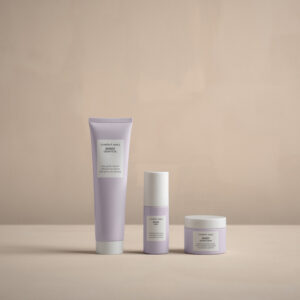
Remedy by Comfort Zone is a fragrance-free, five-product collection designed for delicate, reactive, and hypersensitive skin, with a focus on calming visible redness, easing irritation, and restoring balance at both the barrier and microbiome level.
Remedy by Comfort Zone
The formulas combine botanicals and prebiotics: marula oil for nourishment and antioxidant protection, Marvel of Peru and Mexican hyssop to help quiet neuro-inflammatory responses, and a plant-derived prebiotic to support a healthier microbial environment over time. As Christine Lee, Education Manager for Comfort Zone, explains, the line is designed to “treat all aspects of sensitized skin—from burning and itchiness to redness—while helping to rebuild a healthy barrier and boost the skin’s natural defenses,” with hydration that can be adjusted seasonally.
Standouts include the ultra-gentle Remedy Cream-to-Oil Cleanser, which transforms on contact to cleanse without stripping, and the richer Remedy Defense Cream for deeper nourishment and protection—especially in dry or climate-stressed conditions. Alongside a soothing toner, lightweight serum, and daily moisturizer, it’s a complete, barrier-focused system.
Laurel Skin
Taking a whole-plant, herbalist approach, Laurel Skin offers a distinct—but complementary—path for sensitive and inflamed skin. The line centers on formulas designed to calm inflammation at its source while supporting barrier resilience. The Unburden Serum: Deep Tranquility functions as a concentrated moisturizer and treatment oil, formulated with anti-inflammatory botanicals and lipid-rich plant oils to address redness, reactivity, and chronic imbalance across conditions such as acne, rosacea, and sensitized skin.
Alongside it, Essential Lipids: Delicate Barrier provides a minimalist, essential oil–free blend created specifically for highly reactive or allergy-prone skin, working to mirror and restore the skin’s natural lipid barrier. The Recovery Balm: Soothe + Mend—anchored by tamanu oil and long-infused healing botanicals—acts as a reparative treatment for compromised, irritated skin, while the Cornflower Mask delivers deep hydration through a honey-based, nutrient-dense formula designed to replenish moisture and reduce inflammation in dry, depleted complexions.
Together, the collection reflects a growing shift toward barrier-focused, microbiome-aware care—rooted in both traditional plant medicine and a nuanced understanding of inflammatory skin pathways.

Lily Stroud
Lily Stroud is a contributing editor at Insider's Guide to Spas where she covers beauty and wellness travel. Reach her at lily@insidersguidetospas.com.